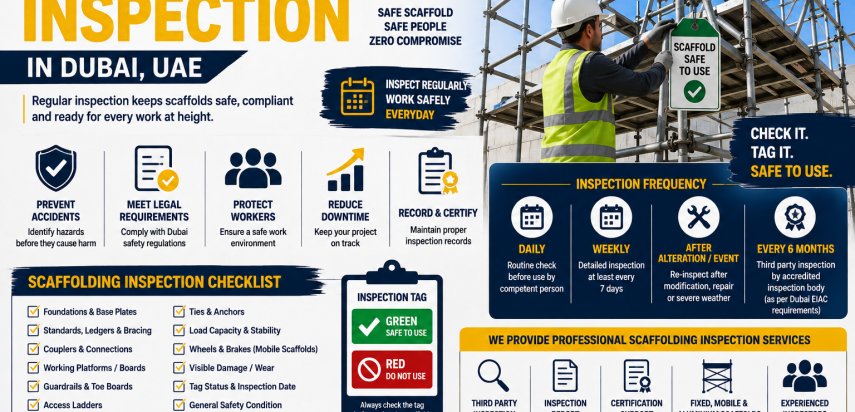
Scaffolding provides temporary access and working platforms for construction, maintenance and industrial activities. However, damaged, incomplete or improperly installed scaffolding can create serious safety risks.
Therefore, regular scaffolding inspection dubai services play an important role in workplace safety and compliance.
In Dubai, scaffold safety involves more than one inspection stage. Site teams may carry out routine and weekly checks, while accredited inspection bodies perform periodic third-party inspections. Under the current EIAC requirements for inspection bodies working in the Emirate of Dubai, fixed, mobile and falsework scaffolds require periodic inspection every 6 months.
Why Is Scaffolding Inspection Important?
A professional scaffolding inspection checks whether the structure remains safe for workers, tools and materials.
The inspection may examine:
- Foundations and base plates
- Standards and ledgers
- Bracing and ties
- Working platforms
- Scaffold boards
- Guardrails and toe boards
- Access ladders
- Couplers and connections
- Loading conditions
- Structural stability
- Safety tags
Regular inspection helps identify damage, missing components and unsafe modifications before workers use the scaffold.
Therefore, scaffolding safety and inspection should form part of every construction site’s safety management process.
How Often Should Scaffolding Be Inspected?
A common question is: how often should scaffolding be inspected?
The answer depends on the type of inspection.
Daily Scaffolding Inspection
A daily scaffolding inspection helps site teams confirm that the scaffold remains safe before workers use it.
Routine checks should focus on visible damage, missing components, unauthorised modifications and changes caused by site activities or weather.
Therefore, inspection of scaffolding should be carried out regularly by a competent and authorised person according to the applicable site procedures.
Weekly Scaffold Inspection
A formal weekly scaffold inspection provides a more detailed examination of the scaffold condition.
Construction safety requirements used by Dubai authorities and free zones commonly require competent-person inspections before use, at least every seven days, after alterations and after events that could affect scaffold safety.
Third-Party Periodic Inspection
For scaffolds within the applicable EIAC inspection scope in Dubai, periodic third-party inspection takes place every 6 months. The EIAC requirements cover fixed, mobile and falsework scaffolds.
Therefore, companies should understand that daily, weekly and six-month inspections serve different purposes.
Scaffolding Inspection Requirements in Dubai
Scaffolding inspection requirements can depend on the project, location, scaffold type and responsible authority.
However, common requirements include:
- Inspection before use
- Regular routine checks
- Weekly competent-person inspections
- Inspection after alteration or repair
- Inspection after severe weather or events affecting stability
- Proper inspection records
- Clear scaffold tagging
- Periodic third-party inspection where applicable
In addition, the EIAC accreditation requirements cover both design review and periodic inspection for scaffolds.
Scaffolding Inspection Checklist
A professional scaffolding inspection checklist helps inspectors follow a systematic process.
A typical checklist may include:
- Base and foundation condition
- Vertical and horizontal members
- Bracing
- Couplers
- Scaffold boards
- Guardrails
- Toe boards
- Access arrangements
- Ties and anchors
- Working platform condition
- Load capacity
- Stability
- Visible damage
- Scaffold tag status
A safety inspection checklist for scaffolding should also consider the scaffold type and intended use.
For example, mobile scaffolding inspection requires attention to wheels, locking systems and stability. Similarly, aluminium scaffolding inspection should consider the condition of lightweight structural components and connections.
Scaffolding Inspection and Tagging
Scaffolding inspection and tagging helps workers quickly identify whether they can use a scaffold.
A commonly used system includes:
- Green tag – Safe for use under the stated conditions
- Red tag – Do not use
A scaffolding inspection green tag should only remain in place when the authorised inspection process confirms that the scaffold is safe for use.
Therefore, workers should always check the scaffold status before accessing the platform.
However, tag colours and systems can vary according to the site or authority requirements. The project should follow its approved tagging procedure.
Scaffold Inspection Tag and Inspection Date
A scaffolding inspection tag should provide important information about the scaffold status.
The tag may include:
- Inspection date
- Scaffold identification
- Inspector details
- Status of the scaffold
- Next inspection information
Recording the scaffolding inspection date helps site teams monitor the inspection schedule and avoid using outdated inspection information.
What Are the Legal Requirements for Scaffolding Inspection?
People often ask: what are the legal requirements for scaffolding inspection?
There is no single answer that applies to every project in the UAE. Requirements can vary depending on the emirate, project authority, free zone and site conditions.
However, in Dubai, authorities and safety regulations commonly require competent inspection before use, regular inspection, inspection after alteration and proper documentation. EIAC also specifies a six-month periodic inspection frequency for inspection bodies working on fixed, mobile and falsework scaffolds in the Emirate of Dubai.
Therefore, companies should always confirm the requirements applicable to their specific project.
Basic, Advanced and Mobile Scaffolding Inspection
A basic scaffolding inspection generally focuses on visible safety and structural conditions.
An advanced scaffolding inspection may involve a more detailed review of the scaffold design, configuration, structural components and applicable standards.
Similarly, a mobile scaffolding inspection focuses on the additional risks associated with movement, stability and locking systems.
The inspection scope should always match the scaffold type and intended use.
Describe the Final and Daily Inspection of Scaffolding
Many people search: describe the final and daily inspection of scaffolding.
A daily inspection checks whether the scaffold remains safe before workers use it. The inspector looks for visible damage, missing components, loose connections and unauthorised changes.
A final inspection takes place after erection or significant modification to confirm that the scaffold meets the required design and safety conditions before use.
Therefore, a safety inspection must be carried out on scaffolding at the appropriate stages and by competent personnel.
Scaffolding Inspection Certificate
A scaffolding inspection certificate provides documented evidence of the applicable inspection.
For third-party scaffold inspections within the EIAC scope, companies should select an inspection body accredited for the relevant scaffold activity and scope.
EIAC’s accreditation scheme covers inspection bodies working with scaffolds, including periodic inspection and design review.
A certificate should not replace routine site inspections. Instead, companies should combine third-party inspection with regular site monitoring.
How Long Does a Scaffold Inspection Certificate Last?
Another common question is: how long does a scaffold inspection certificate last?
Under the current EIAC requirements for inspection bodies working in the Emirate of Dubai, the periodic inspection frequency for fixed, mobile and falsework scaffolds is every 6 months.
However, this does not mean that the scaffold can operate for six months without daily or weekly checks.
Site inspections must continue according to the applicable safety procedures.
Third Party Inspection for Scaffolding
A third party inspection for scaffolding provides an independent assessment of the scaffold.
The inspector checks the scaffold against the relevant inspection criteria, applicable standards and approved design where required.
EIAC states that periodic inspection includes a thorough inspection of the scaffold against the relevant inspection standard.
Therefore, third-party inspection can support construction projects, maintenance activities and safety compliance requirements.
Scaffold Inspection Document and Records
A proper scaffold inspection document helps companies maintain inspection records and track scaffold conditions.
The document may include:
- Scaffold identification
- Location
- Scaffold type
- Inspection date
- Inspection findings
- Defects identified
- Corrective actions
- Inspector details
- Inspection status
A scaffold inspection board or site information board may also display important safety and inspection details near the scaffold.
How Many Days Between Scaffold Inspections?
Searches such as scaffolding inspection how many days, scaffolding inspection how often, and scaffold tag inspection frequency can create confusion.
The simplest answer is:
Daily: Routine checks before use or according to site procedures.
Weekly: Formal competent-person inspection, commonly at least every seven days under applicable construction safety requirements.
After changes: Re-inspection after alteration, repair or events that affect safety.
Every 6 months: Periodic third-party inspection under the applicable EIAC scaffold inspection requirements in Dubai.
Need Scaffolding Inspection in Dubai?
If your project requires inspection for scaffolding, periodic certification or an independent safety assessment, a professional scaffolding inspection company can help review the equipment according to the applicable scope and requirements.
We support:
- Fixed scaffolding inspection
- Mobile scaffolding inspection
- Aluminium scaffolding inspection
- Periodic inspection
- Third-party inspection
- Scaffold inspection reports
- Inspection certification
- Safety assessment
Request a Quote – Fill. Submit. Receive.
Share your scaffold type, location, quantity and project details with us.
Our team will review your requirement and guide you on the applicable inspection scope.
Frequently Asked Questions
1. Scaffold inspection should be done by whom?
A competent and authorised person should carry out routine and site inspections. For applicable third-party inspections, use an inspection body with the appropriate accreditation scope.
2. What is the scaffolding inspection duration?
The scaffolding inspection duration depends on the scaffold type, size, complexity, location and inspection scope.
3. What is a green tag scaffolding inspection?
A green tag scaffolding inspection indicates that the authorised inspection process has confirmed the scaffold as safe for use under the stated conditions.
4. What is included in a scaffold inspection guide?
A scaffold inspection guide generally covers structural stability, foundations, access, working platforms, guardrails, toe boards, connections, load conditions and scaffold tags.
5. Do mobile scaffolds require inspection?
Yes. Mobile scaffolds require inspection. In addition, inspectors should check wheels, brakes, locking systems and stability.
6. How often should scaffolding be inspected in Dubai?
The frequency depends on the inspection type. Routine checks may occur daily, formal site inspections commonly occur at least weekly, and the applicable EIAC periodic inspection frequency for fixed, mobile and falsework scaffolds in Dubai is every six months.